渋 Astringent, Hesitate
The kanji 渋 means astringent, hesitate, reluctant, have diarrhea. It has 11 strokes.
- Meaning
- astringent, hesitate, reluctant, have diarrhea
- Strokes
- 11
- School grade
- Secondary school
- JLPT
- N1
- Frequency
- #1,235 of 2,136 Jōyō kanji
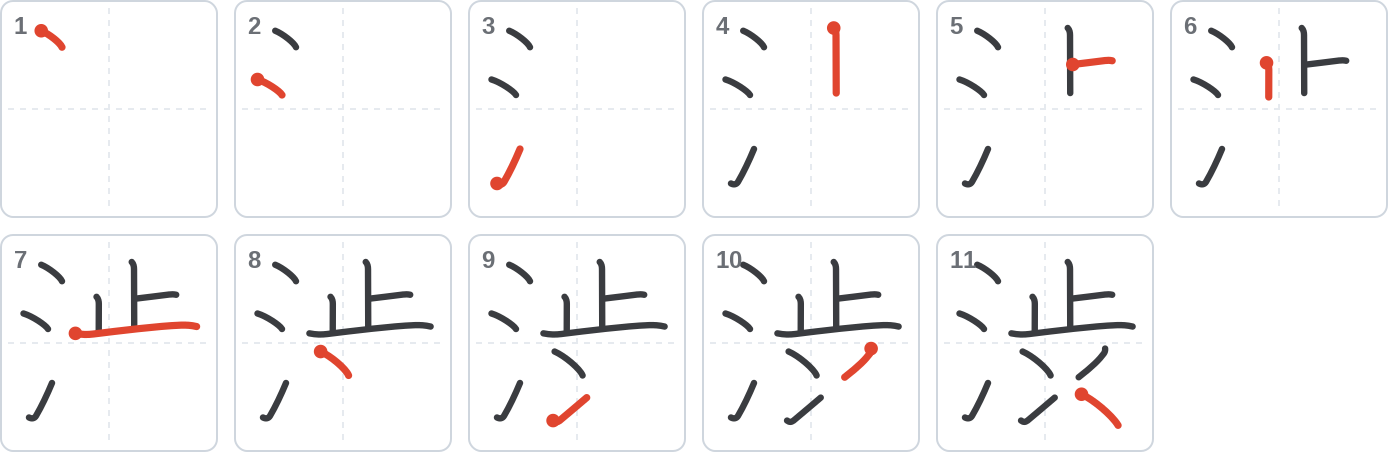
How to write 渋: stroke order
Write 渋 in this order, starting each stroke at the red dot.
Readings of 渋
On'yomi (Chinese reading)
- ジュウjuu
- シュウshuu
Kun'yomi (Japanese reading)
- しぶshibu
- しぶいshibui
- しぶるshiburu
Practise writing 渋
Write 渋 stroke by stroke on Kanji Scholar's pad: it checks each stroke as you write and brings 渋 back for revision until you know it. Kana and the 80 Grade 1 kanji are free. 渋 is in the full course, a one-time purchase.
Common words with 渋
| Word | Reading | Meaning |
|---|---|---|
| 渋い | しぶいshibui | astringent; bitter; puckery |
| 渋る | しぶるshiburu | to be reluctant (to do); to be unwilling (to do); to hesitate (to do) |
| 渋滞 | じゅうたいjuutai | (traffic) congestion; traffic jam; gridlock |
| 渋谷 | しぶやshibuya | Shibuya City (special ward of Tokyo); Shibuya |
| 渋面 | じゅうめんjuumen | grimace; sullen face |
| 苦渋 | くじゅうkujuu | bitterness; distress; pain |